


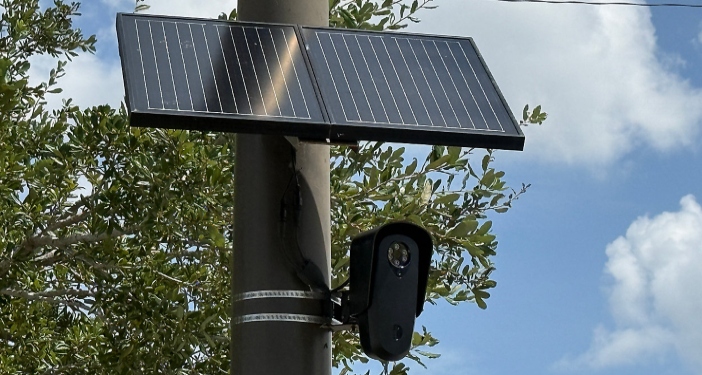
Automated license plate cameras are becoming increasingly visible in communities across the country, appearing on roadways, at intersections, in parking areas and other locations.
Often associated with Flock Safety, these cameras are used by law enforcement agencies to identify and track vehicles connected to investigations.
As a vehicle passes through the camera’s field of view, the system may record the license plate number along with identifying characteristics such as the vehicle’s color, make and model. When cameras in different locations capture the same vehicle, those records can potentially help investigators establish where and when that vehicle has been seen.

Supporters say the technology has become a valuable resource for police investigating crimes, locating stolen vehicles, finding missing persons and identifying suspects.
But the growing network of cameras has also sparked concerns about privacy and government surveillance. Critics question how long vehicle information is retained, which agencies can access it and under what circumstances searches can be conducted.
A website called HaveIBeenFlocked.com is now giving drivers an opportunity to see whether their own license plate appears in certain records related to those searches.
The website allows users to enter their license plate number and the state where the plate is registered. It then checks information the site’s operators have obtained from government agencies through public records requests.
When information is available, a search may reveal details including the date a license plate was queried, the agency associated with the search and the reason or purpose entered for accessing the information.
The website is not operated by Flock Safety. It was created independently by individuals concerned about the expanding use of automated license plate reader systems and the amount of information they can collect about where vehicles travel.
The records available through the site include searches connected to a wide variety of law enforcement matters, from relatively minor incidents to major criminal investigations.
Law enforcement agencies maintain that the cameras are an important investigative tool that can save time and help officers respond quickly when searching for a particular vehicle.
Privacy advocates, however, warn that a widespread network of license plate readers can create extensive databases capable of documenting a vehicle’s movements across multiple locations.
A Clean Search Does Not Mean Your Plate Was Never Checked
Drivers should understand that the website does not provide a complete nationwide record of every license plate search.
The information available on Have I Been Flocked comes from records obtained from specific government agencies. If an agency’s records have not been requested or released, searches involving that agency may not appear in the database.
There may also be a delay before recently obtained records are added to the website.
That means receiving no results should not be interpreted as proof that a license plate has never been searched.
Automated license plate reader technology continues to expand across the country, with supporters emphasizing its value to law enforcement and critics raising questions about privacy.
The website offers drivers one way to look for publicly obtained records that may indicate whether their vehicle has been the subject of a search.
Drivers can check available records by visiting HaveIBeenFlocked.com.
