

Texarkana College is expanding its already growing aviation program with a new, specialized training course that could open another door into the aviation maintenance industry—particularly for people interested in working on smaller, light-sport aircraft.
The college announced Wednesday that the Federal Aviation Administration has accepted TC’s Light-Sport Repairman–Maintenance (LSRM) training course, placing Texarkana College among a relatively small number of institutions nationwide offering FAA-accepted training of its kind.
The new program is especially significant as the FAA changes the rules governing light-sport aircraft. The agency’s Modernization of Special Airworthiness Certification, or MOSAIC, rule expands the types of aircraft that can qualify as light-sport aircraft, potentially increasing the number and variety of aircraft requiring technicians with specialized maintenance training.

For Texarkana, the program also adds another piece to an aviation workforce-development pipeline that has been growing in the region.
That pipeline begins with local high school students through Tango Flight, continues into Texarkana College’s FAA Part 147-approved Aviation Maintenance Technician program, and can ultimately lead to careers throughout the aviation industry.
“This is about much more than adding another aviation course,” said Tyler Poole, Coordinator of Aviation at Texarkana College. “We are building a workforce pipeline that starts before students ever graduate from high school and gives them a clear path into professional aviation careers.”
From Building an Airplane to Building a Career
The connection to Tango Flight is particularly interesting for local aviation enthusiasts.
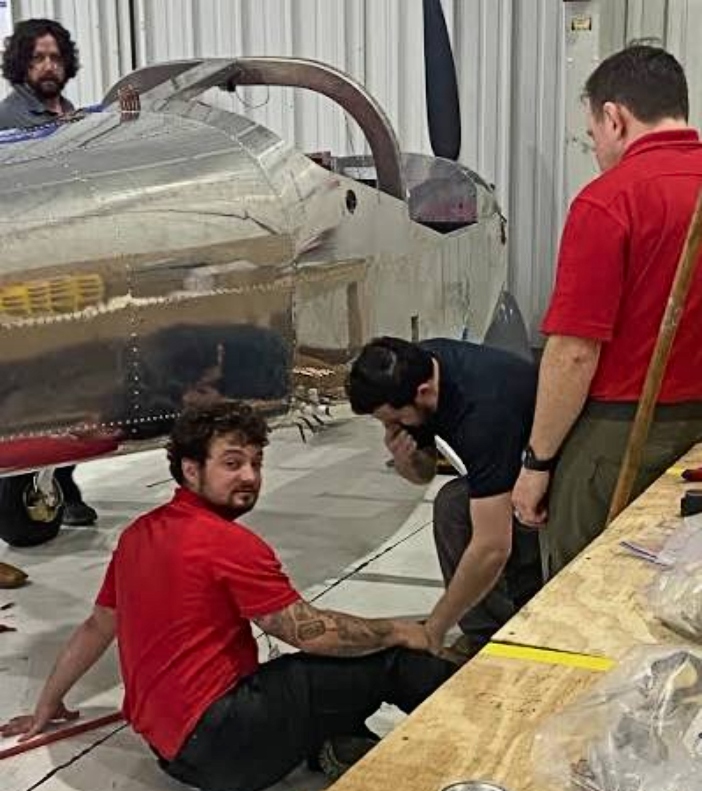
Through the partnership, high school students get hands-on experience building an FAA-certified, two-seat light-sport aircraft while learning about aircraft systems, tools and maintenance practices.
That includes the RV-12 aircraft being built by Tango Flight students in the Texarkana area.
Students who successfully complete the two-year Tango Flight program and meet competency requirements can enter TC’s Aviation Maintenance Technician program with up to 18 hours of Airframe and Powerplant coursework already completed.
Now, the new LSRM training provides another specialized option for people whose aviation interests may center specifically around light-sport aircraft.
Approximately 50 Tango Flight instructors are expected to complete the LSRM training, further strengthening the technical side of the high school aviation program.
“Our instructors are the foundation of everything we do at Tango Flight, and this training makes them even stronger,” said Brandon Sanders, Associate Executive Director of Tango Flight. “It strengthens the technical foundation of the program and gives students an even stronger connection between the hands-on work they do in high school and the professional aviation careers they can pursue after graduation.”
Another Piece of Texarkana’s Aviation Puzzle
The expansion comes as Texarkana continues working to establish itself as an aviation workforce hub.
AR-TX REDI, the regional economic-development organization serving Northeast Texas and Southwest Arkansas, has worked with Texarkana College, area school districts and Tango Flight on developing the aviation workforce infrastructure.
“AR-TX REDI recognized an opportunity to build an aviation cluster in Texarkana that simply did not exist before,” said Rob Sitterley, President and CEO of AR-TX REDI.
Today, Texarkana College hosts three Tango Flight cohorts—one with Texarkana Independent School District, one with Texarkana Arkansas School District and one serving western Bowie County students through TC @ TexAmericas Center.
TC says it is working toward a goal of graduating 300 aviation students annually through traditional enrollment, the Tango Flight pipeline and military SkillBridge pathways.
For students, aviation enthusiasts and people looking for a career that doesn’t necessarily mean sitting behind a desk, the growth of the program represents something bigger than another college course.
It means a student can potentially start by building an airplane in high school, move into specialized or professional aviation maintenance training at Texarkana College, and eventually turn those skills into a career.
And for a region that is actively trying to attract aviation-related businesses, having that skilled workforce already developing locally could prove to be one of Texarkana’s biggest advantages.
For more information about Texarkana College’s aviation programs, visit texarkanacollege.edu.