


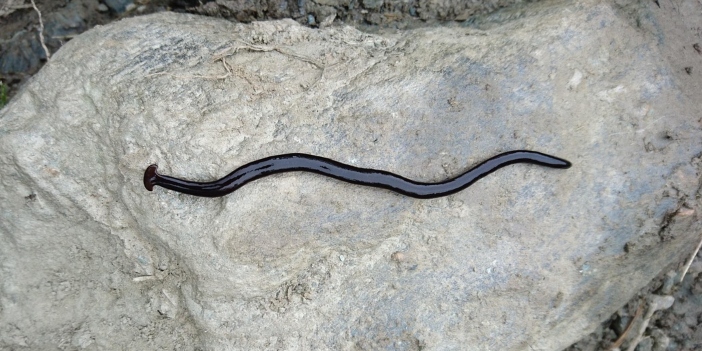
Residents across the Ark-La-Tex are being warned to stay alert as reports of hammerhead worms begin to rise again with the return of warmer, wetter weather. These bizarre-looking creatures, named for their distinctive flat, shovel-like heads, are more than just creepy — they can pose risks to both humans and pets.
Experts say these invasive flatworms, which can grow up to 15 inches long, thrive in damp areas like gardens, under flower pots, and around bricks or patio stones. With their reappearance in Arkansas, local authorities and pest control specialists are urging people to take precautions, especially when children and pets are playing outdoors.
What makes the hammerhead worm particularly concerning isn’t just its odd appearance — it’s the neurotoxin in its slime, which contains the same toxic compound found in pufferfish. While contact with the worm is unlikely to harm a healthy adult, dogs and cats who ingest one can become seriously ill. Parents are also being advised to keep an eye out, as kids playing in yards or gardens could accidentally come into contact with one.

The hammerhead worm is known for feeding on earthworms, which can disrupt local soil health. But what really has folks squirming is how hard they are to kill. If chopped up, each piece can regenerate into a new worm — a process that can begin in just a few days.
Instead, pest experts recommend wearing gloves when handling the worms, and using a mix of salt, vinegar, or citrus oil to neutralize them. Once dispatched, the remains should be placed in a sealed bag and frozen for up to 48 hours before disposal to ensure the worm doesn’t come back for round two.
We aren’t alone in this slimy situation. Hammerhead worms have been reported in Texas, Arkansas, Louisiana, Mississippi, Georgia, Florida, the Carolinas, Alabama, and even as far west as California.
For now, the best defense is awareness. If you spot one of these invaders in your yard, resist the urge to squish it, and follow the recommended disposal methods. And remember — just because you haven’t seen one, doesn’t mean they aren’t lurking under your garden tools.